Cyclone Ditwah — Health Impact, Emergency Response & SLMA Guidance
Cyclone Ditwah caused catastrophic flooding and landslides across Sri Lanka. This article summarises the immediate health impacts, public health risks, and practical guidance from SLMA for clinicians, health facilities, and affected communities.
Summary of Immediate Public Health Concerns
Cyclone Ditwah made landfall and brought intense rainfall, flash floods, and multiple landslides across most provinces. The disaster has resulted in widespread displacement, damage to infrastructure, and significant loss of life. Search-and-rescue and emergency medical services remain under strain.
Key Health Risks Post-Disaster
- Waterborne Diseases: Acute diarrhoea, leptospirosis, and typhoid from contaminated water sources.
- Vector-Borne Outbreaks: Elevated post-flood risk of dengue fever due to stagnant water creating new breeding sites.
- Trauma & Injuries: From debris, collapsed structures, and floodwater exposure.
- Interruption to Essential Care: Lack of access to medications and continuous treatment for chronic diseases (e.g., diabetes, hypertension).
SLMA Emergency Guidance
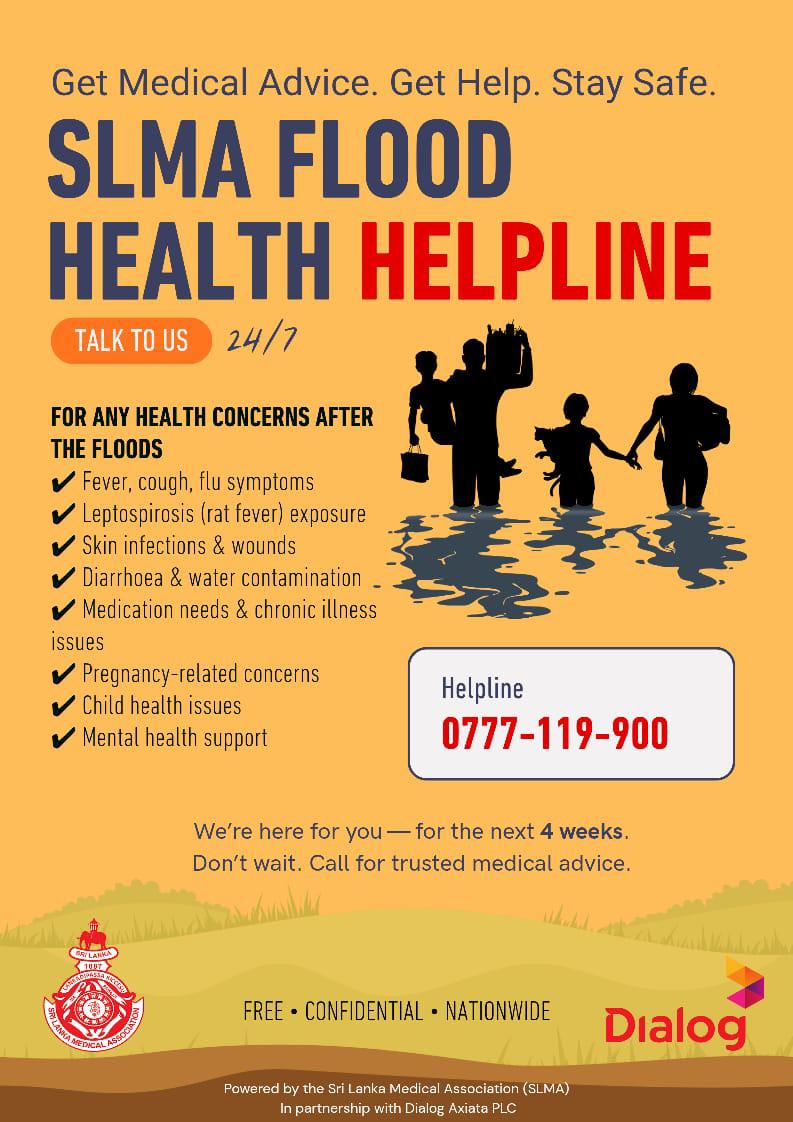
Contact for rapid medical advice via phone, WhatsApp, or online consultation related to Cyclone Ditwah health emergencies. Click the image for full contact details.
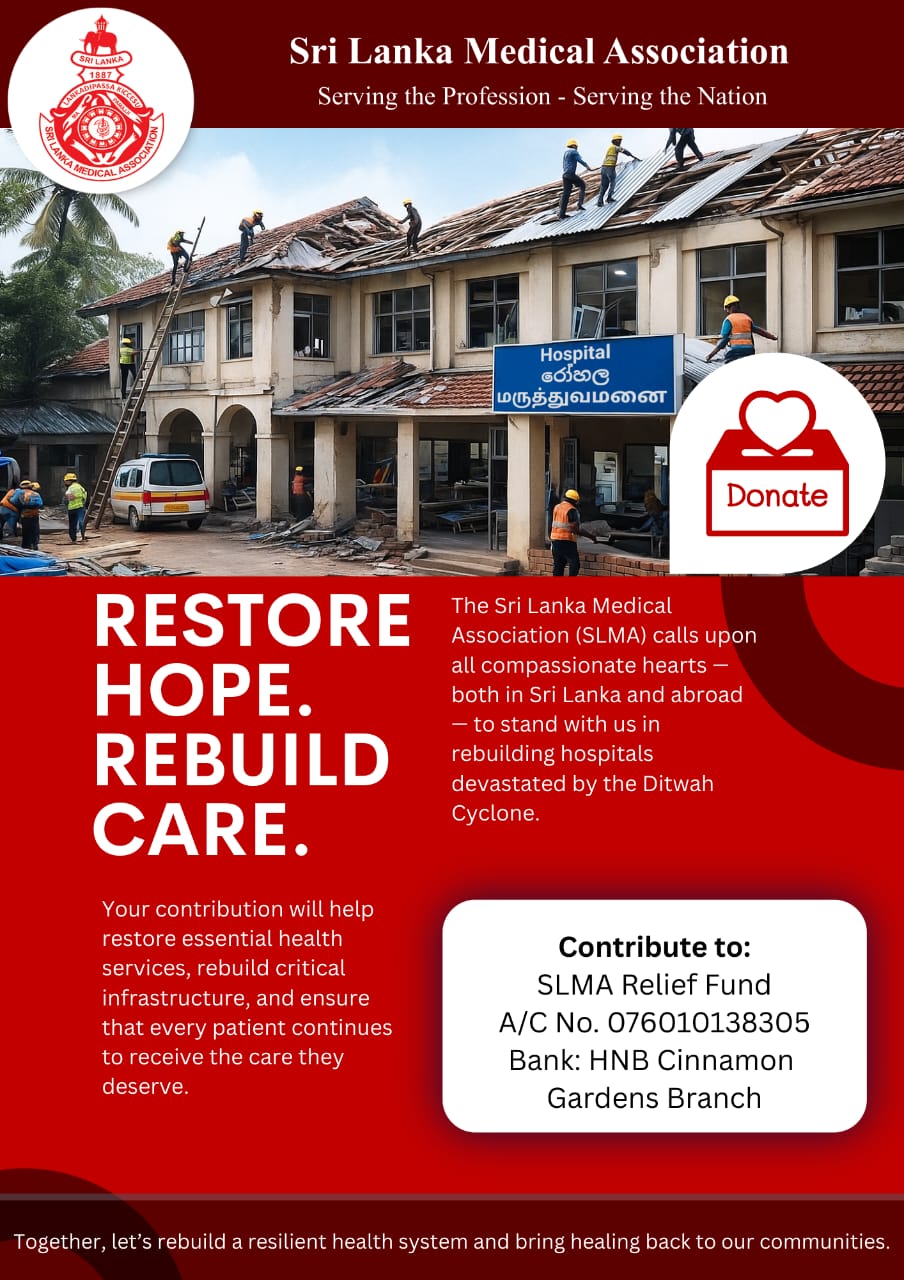
Help us rebuild critical infrastructure and restore essential health services for the affected communities. Give every patient the care they deserve.
A/C No: 076010138305
Bank: HNB Cinnamon Gardens Branch
Fund: SLMA Relief Fund
Essential Community Advice
Protect yourself and your family with these critical steps:
- Water Safety: Use boiled or bottled water for drinking and food preparation until safety is officially confirmed.
- Floodwater Contact: Avoid wading; if unavoidable, thoroughly clean any open wounds immediately and cover them.
- Hygiene: Dispose of spoiled food promptly, clean latrines frequently, and maintain rigorous personal hygiene.
- Medical Alert: Seek urgent care for symptoms like persistent fever, severe diarrhoea, or signs of wound infection (redness, swelling, pus).
- Vaccination: Ensure your tetanus vaccination is up-to-date, especially following a flood-related injury.
Guidance for Health Facilities & Clinicians
Health facilities should immediately focus on:
- Triage & Trauma: Rapid stabilization and treatment of trauma and injury patients.
- Infection Control: Implementing safe water and enhanced infection prevention practices in all facilities and evacuation centres.
- Chronic Care Continuity: Establishing continuity plans for essential medications (diabetes, hypertension) and linking patients to mobile clinics.
- Mental Health: Providing mental health and psychosocial support for survivors, first responders, and staff.
Preventive Measures for Vulnerable Groups
- Pregnant Women: Must seek immediate medical advice and strictly avoid flood-affected areas due to heightened risks.
- Children/Elderly: Should not enter floodwater and require extra attention to hygiene to prevent severe infections.
- Chronic Patients: Secure your essential medications and utilise telehealth/telemedicine guidance if travel is restricted.
SLMA Coordination & Relief Efforts: SLMA is actively collaborating with the Ministry of Health, local hospitals, and humanitarian partners to deliver medical supplies, mobile clinics, and emergency teams to the worst-hit areas. Telehealth and community awareness campaigns are ongoing.